I would like to read about teenagers out in the world struggling to transition because I find it laughable and weird that anyone would think transitioning into an adult would be easy or uninteresting or not meaningful material for a book.
9.23.2011
books, you've failed me
I would like to read about teenagers out in the world struggling to transition because I find it laughable and weird that anyone would think transitioning into an adult would be easy or uninteresting or not meaningful material for a book.
8.20.2011
Review: How I Live Now by Meg Rosoff
It would be much easier to tell this story if it were all about a chaste and perfect love between Two Children Against the World at an Extreme Time in History. But let's face it, that would be crap.
Daisy is sent from New York to England to spend a summer with cousins she has never met. They are Isaac, Edmond, Osbert and Piper. And two dogs and a goat. She's never met anyone quite like them before - and, as a dreamy English summer progresses, Daisy finds herself caught in a timeless bubble. It seems like the perfect summer. But their lives are about to explode.
Falling in love is just the start of it. War breaks out - a war none of them understands, or really cares about, until it lands on their doorstep. The family is separated. The perfect summer is blown apart. Daisy's life is changed forever - and the world is too.
-from puffin
"Early the next morning I was strolling around as usual in my unpleasantly populated subconscious..."
-HOW I LIVE NOW (Ch 5, p. 17)
"I was wandering around as usual, in my unpleasantly populated subconscious..."
— Dodie Smith (I CAPTURE THE CASTLE)
I do hope Rosoff is paying homage to Smith's brilliant I CAPTURE THE CASTLE here. I'd like to think so, because HOW I LIVE NOW otherwise possesses a thoroughly original voice. If I really tried, I could summon up the similarities between these two novels: I CAPTURE THE CASTLE and HOW I LIVE NOW both have main characters whose voice renders them completely real as people, perhaps more than real. Both novels bring the English countryside (a la run down castle/manor) to life with glorious, ecstatic prose and touch on first love, albiet with rather unconventional love interests (bearded older man in love with sister/ cousin).
I first read HOW I LIVE NOW more than a year ago, when it was recommended to me by a friend (thanks, Vee!). I don't know what I was doing at the time, but for some reason, I didn't connect with the book. I barely remember reading it, though I do remember vaguely thinking "this is pretty good."
When I reread it yesterday, the aliveness and the vividness and the connection was there. As if this book had waited for me, patiently, resting in my bookshelf until the day I could pick it up in the right frame of mind and really appreciate it.
I appreciate it now.
HOW I LIVE NOW is one of the voice-iest YA novels I've ever read. The main character Daisy is humorous and LOUD and uninhibited and insightful. She narrates with run on sentences breathless with wit and CAPITALIZED WORDS to emphasize a point. There's not much dialogue, and the book is mostly her telling us what happened and what she thinks, but it works. It more than works.
At first, HOW I LIVE NOW has this sense of peacefulness (although mediated with Daisy's loudness) emanating through the pages. Her cousins, who she comes to live with in England, possess gifts that are related to us in a matter-of-fact tone but are actually quietly magical: Isaac and little Piper talk to animals, and Edmond can feel Daisy's thoughts. There's this light touch of magical realism when it comes to Daisy's interactions with her family, making everything feel sort of strange, but lovelily strange.
Later, Daisy falls in love with cousin Edmond, and though she acknowledges it's wrong, she talks of it as if it's inevitable and natural and effortless. I don't know if I really understood the Edmond/Daisy relationship. Was it just two alone souls reaching across to each other, yearning for love during a time of war? Was it lust? If Daisy is to be believed, this is love, though of an unorthodox kind.
Daisy and cousins spend a few golden months living without parental supervision (thanks to her Dear Aunt being stranded in Norway). They fish and swim and play and it's generally a bit like The Garden of Eden. War interrupts eventually, as it has a habit of doing. Daisy has hinted at it since the beginning. The enemy is unnamed, the public is confused, cites are bombed, people are dying. When war finally catches up, Daisy and her cousins are separated. There's death and violence, without sense or cause, graphic and mindless and sickening to read about. Daisy and her cousin Piper stick together, attempt to survive it all. It's here that Daisy comes into her own, and when I wanted to stand up and APPLAUD because she's so damn strong.
Really, the only problem I had with this book was the ending, and then the six-year jump that acted as an epilogue. The precursor to the time jump was abrupt and Rosoff, for whatever reason, had Daisy tell us about it only after it happened, which was disorienting to me. The six year-jump was interesting, especially since Rosoff matured Daisy's voice beautifully. But the ending almost felt almost like Rosoff laughing at us and saying "hey, these really cool and fascinating things happened, and sorry that you missed it, but here's this situation and ending that will hopefully tie things up for you."
Still, I really liked HOW I LOVE NOW. It's one of those books that's left an impression on me, one that I'll return to reread. Most notably, its narrator managed to escape its pages and become a part of me. I think that's when you know you've read a good book; when you can feel the edges of a character and the dimensions of his/her voice, and they've set up shop in your brain and they're as complete and solid to you as a person you might've talked to in real life.
Yes, I'm glad I reread HOW I LIVE NOW.
RECOMMENDATION: Highly recommended. It's a Printz winner, so I'm not the only one who thinks it's great.
8.12.2011
I'm kind of tired of series.
8.10.2011
my past reviews are mostly void + title vibes+ notes
FALL FOR ANYTHING
CHAINS
8.07.2011
Imaginary Girls by Nova Ren Suma

I am leaving this here solely because I would like this beautiful cover on my blog first-thing, not some depressing post about a hiatus.
Also, hello (:
SUMMARY:
Chloe's older sister, Ruby, is the girl everyone looks to and longs for, who can't be captured or caged. When a night with Ruby's friends goes horribly wrong and Chloe discovers the dead body of her classmate London Hayes left floating in the reservoir, Chloe is sent away from town and away from Ruby.
But Ruby will do anything to get her sister back, and when Chloe returns to town two years later, deadly surprises await. As Chloe flirts with the truth that Ruby has hidden deeply away, the fragile line between life and death is redrawn by the complex bonds of sisterhood.
With palpable drama and delicious craft, Nova Ren Suma bursts onto the YA scene with the story that everyone will be talking about
REVIEW:
I just finished IMAGINARY GIRLS. Literally--I turned the last page a moment ago. It's normally a bad idea for me to write reviews without a breathing period, where my thoughts can take shape, my reaction stabilize. And I haven't written a review for a long time, have purposefully not written reviews for months. But I want to write this so I can think about this book more. I'm not sure what I feel about this book and why. I need this space to decide.
In some ways, this book was everything I could ever want out of a novel. In glittering, shining moments of the narrative, when a particular line uncurled itself from the page, came alive, just stood there and said hello to me, I felt it. When an arresting image appeared in front of my eyes, vivid and real enough to touch or breathe or live briefly in, I felt it. It's that thrilling feeling you get sometimes, when you're reading something that will become important to you. It's like a tickle in the gut. This was THE BOOK, I thought. My newest soul-book.
But for some reason, as the last page lies read on my nightstand, I realize IMAGINARY GIRLS never quite arrived there. What I'm left with is more a fleeting impression of a novel; several alive scenes, restless segments of language stuck in my head, a recollection of dialogue. At this moment, at least, IMAGINARY GIRLS is not quite substantial enough for me. Not quite enough.
It's not because of the prose, because the writing is beautiful. Suma writes with such grace. Her sentences flow ceaselessly on the page, undulating into and out of themselves, connecting with each other in moments of wonderful rhythm. Her imagery is precise--the details, small actions and appearances of characters focused on with microscopic intensity render sometimes surreal, sometimes poignant scenes.
It's not the premise. Magical realism or surrealism are currently my favorite things to read. I want more of it in YA; I'm hungry for it. And I want more stories like this in YA, that leave questions in your mind,
that are perhaps a bit strange but singularly unique, that make you think. Though the slow-moving events and the sometimes lack of a plot won't win as many teen readers over, I didn't mind too much, although I'll admit my attention sometimes waned during long paragraphs of internal monologue. Or perhaps it is the plot--how do I explain? It doesn't feel entirely like a linked story, this book. More a collection of compelling, surreal images. There's more atmosphere than happening, more prose than character.
And it's the characters, I've begun to think, that makes this book one star less for me. They're not quite enough. It's the fact that I can't sense them. They didn't come alive, in the way the setting and the descriptions did. I can't think of a character trait for the main character Chloe other than her obsessive love for her sister Ruby, her yearning. Ruby is easier, I suppose. She's cruel and beautiful and powerful. But Chloe? She's an empty vessel for the story. She narrates. She tells of enigmatic, wonderful Ruby, and that is all. But do I have a right to complain about her, when I love THE GREAT GATSBY so? Shouldn't I think something more reasonable, like Chloe's lack of substance is a reflection of Ruby's power to ensorcell, to captivate everyone and everything, so even a book about her younger sister focuses on her while her "echo" of a sister dissipates?
I don't know. I am left feeling strange by this book. It's not the more unusual turn of events, which I found refreshing and lovely. It's the feeling of having missed something, lost something. Maybe if I'd read this earlier in my life (or later--I'm not sure which) it would have meant more to me. It's the fact that it doesn't--for whatever reason--the characters, I suppose--that makes me feel unsettled, more than the threatening, oil black surface of Chloe's reservoir ever did.
RECOMMENDATION: Highly Recommended. One of the better YA books I've read, though the mystery of why I don't strongly love it (only really like it) is why I wrote this review.
SOME CHOICE QUOTES:
"I was an echo of her."
"In reality I was a pencil drawing of a photocopy of a Polaroid of my sister--you could see the resemblance in a certain light, if you were seeking it out because I told you first, if you were being nice."
"my boots miss your feet
my head misses your hairbrush"
"She locked her eyes on mine. (The whites of her eyes staring up at the half moon.)
She cracked a smile. (Her lips drained of color.)"
4.12.2011
on hiatus
For anyone who's followed in which a girl reads from the very beginning, or at least a time where I was actually blogging regularly, it's pretty obvious that my blog currently lacks luster. New posts are rare. My comments and reading of other blogs is almost nonexistent. I'm just--to put in plainly--not here anymore.
I've expressed a certain sadness at this withdrawal from the blogosphere before, and at this realization, also expressed a desire to revitalize a blog quickly disintegrating. I tried--and I think we can conclude, as of now, I've failed. Miserably.
I could blog if I wanted to. But that want just isn't there any more.
The thing is, I'm different from the starry-eyed fifteen year old that accidentally began blogging almost two years ago. I read different books. I think different thoughts. I have different priorities.
This is reflected in my blog. I don't know what to post anymore; I'm deeply unsatisfied with my reviews of late, and feel that they've lost a lot of their meaning. I think my impressions when reading have lost a lot of their weight with the general reading audience. And I rarely read YA anymore. What books I do read, I read differently; slowlyslowlyslowly, ponderously, with a different purpose.
Last year, I went on a month-long hiatus to study for AP tests. As I look into my future months, I see the best thing to do is to go on hiatus at the present time.
In April I have:
1) AP death studying
2) the biggest decision of my life yet: I have to decide (oh no, oh no) where I'll attend college, and this decision is literally occupying my mind day and night.
In May I have
1) AP testing
2) Finals
3) Graduation.
This isn't too much, but throughout summer I'll have limited internet access. In fall, I'll be starting college. Throughout this all I have scholarships to do, family and friends to spend time with, a book to write, new worlds to explore.
I've concluded I'd like to spend my time in the next three months (at least) in venues other than blogging. And really, I think dragging things out--pretending unfairly to myself and to readers that I can dedicate myself to blogging at this present time--isn't the right thing to do.
I don't want to call this a goodbye post--it's definitely not that--but a hiatus post. I will be taking a break from blogging, at least for a few months. I hope to come back one day.
If you'd still like to contact me in the next few months, please email me at inwhichagirlreads@gmail.com
I'd love to hear from you. Any of you: lovely commenters, lurkers, people that would like to chat about books or chocolate or want college advice or anything. Hopefully I won't be as awful at corresponding as I usually am.
And lastly, thank you for reading in which a girl reads, and for making my blogging experience thus far so much more wonderful.
3.26.2011
Diana Wynne Jones
Diana Wynne Jones is and always will be my favorite author. She's the reason I read. Her books are what made me believe in fantasy, in writing, in reading, in the world.
I want to write so many things about DWJ; paragraphs about every book I loved by her, sentences about the sense of wonder she instilled in me, lines about those countless hours I spent re-reading every word she ever published. I want to somehow capture what she means to me as an author. I'd like to express how much the news devastated me.
I wept when I heard. I haven't ever met her, but her books--oh, they're just everything to me.
Diana Wynne Jones is prolific and wonderful. She needs to be known and read. The best way to honor her is to love her works.
I hope I am honoring her. I wish I had more words in me for this post, but today, they've failed me. I know I can say with certainty that my life would not have been the same without her books--it would not have quite as much magic in it, quite as much hope.
Thank you for that, Diana Wynne Jones. I will never stop reading your books, and I will never stop loving them.
RIP.
3.13.2011
Review: Anna and the French Kiss
I think life is moving too quickly for me (whaaa? I'm going to graduate from high school soon? I'm going to college?!), but also horrifically slowly (why do the days drag by slower than snails?).
I really should blog to fill that time up.
Anyways, a few weeks ago I was hyperventilating over Anna and the French Kiss. Reviews were uniformly glorious. I hopped to Book Depository, ordered, and it soon showed up on my door step, wrapped and bundled up. I read it last week.
Which brings me to this present day. Lately I've been feeling a bit deflated because, *drum roll* I gave up chocolate for lent.
*rolls around in pain and heartache*
*soul cries out*
Ahem.
Review time.
Book Summary:

Anna is looking forward to her senior year in Atlanta, where she has a great job, a loyal best friend, and a crush on the verge of becoming more. Which is why she is less than thrilled about being shipped off to boarding school in Paris—until she meets Étienne St. Claire: perfect, Parisian (and English and American, which makes for a swoon-worthy accent), and utterly irresistible. The only problem is that he's taken, and Anna might be, too, if anything comes of her almost-relationship back home.
As winter melts into spring, will a year of romantic near-misses end with the French kiss Anna—and readers—have long awaited?
My Opinion:Anna and the French Kiss starts out slow. In particular, the first three chapters drag by at a glacial pace, as the narrator busies herself with filling in backstory. However, the novel soon picks up speed, and by the end manages to overcome most of its flaws and standout as one of YA's funnest romance reads of the year.
I am jealous of Anna. Oh, how I wish that my parents had packed me off to boarding school in history-soaked Paris, bakery goods and beautiful architecture everywhere, the ambiance of another country to fill my days. An experience like that would have quite honestly made my life, so at first I could not relate to the homesickness and resentful moping Anna felt as she acclimated to her new environment. Of course, many teenage girls would feel the same way as her and all in all, Anna is a pretty realistic character, which is the most important thing. I appreciated that she had a real passion--film--in her life, and ambitions to become something when she was older. I appreciated that her dialogue wasn't stilted or forced, that she thought like a teenage girl, that she had insecurities and flaws that added to her characterization. Above all, I found her relatable and likable, if a bit humdrum.
I'm not so sure about the other characters though. I know that Etienne is supposed to the ultimate love interest, but I didn't really care for him. He seemed a little too, I don't know, perfect. How many teenage boys exist like him? I really think they're a rare, if not extinct, breed. But I guess a suspension of belief on my part is needed, and the fact that he seems like a relatively caring, sweet person really negates a lot of the realism problems. The thing is, though, that as the story progressed, and Anna fell more and more in love with him, to the point of blind devotion, I couldn't help but wonder how unreliable Anna is with her observations of him. We're presented with this perfect semblance of a teenage guy: nice hair, an English accent, extremely intelligent, caring. Yet, his actions are anything but. If you pause and really think about him objectively-- fuzzy descriptions aside-- he's actually quite a jerk. He strings Anna along (a later explanation of continuous misunderstandings didn't really convince me) for much of the book. He flirts with other girls. He basically is leading Anna on, while he has a serious girlfriend that he won't break up with. I have to ask, isn't that cheating? Isn't breaking up with the girl you're not in love with anymore the decent thing to do before you start gallivanting around town?
I don't know, that just strikes me as a horrid thing to do, whatever Anna tells me.
This book posed a few interesting questions for me as a reader. Am I just not a romance reader, since I often find such issues with the idealized guy? Am I just cynical? Is the devotion Anna has in anyway similar to the devotion paranormal main characters have for their immortal boyfriends that I find so troubling? How do you differentiate between love and obsession?
I think I mostly got the impression of love out of Anna and the French Kiss. What really saved the book was the gradual development of the relationship, the fact that they were friends first, that Anna helps Etienne through a hard time because she cares about him, not because he's got a pretty face. I think what separates this book from most YA romance is the fact that the relationship is mostly based on the two's actions for each other, not how hot or physically attracted they are to each other.
And that makes all the difference.
The one thing I thought was unrealistic: the college application process described. The timing was way off for when Anna got her acceptances, unless she got early notification, and it really wasn't explained at all, or explained vaguely. I found it strange that Anna kinda underhandedly decided about the whole thing without telling the reader about it. I mean, if you're going to move from Paris across to the other side of the country that you're normally from, I think that'd factor into your thoughts during senior year. At least a little bit, I'd hope.
Ultimately, as much as a I complain, I can't deny that I had a wonderful time reading the book, and was caught up in the romance and most of all, her experience in Paris. Perkins has a gift for making her main character really develop, though many of the secondary characters did not come to life and were not as well-formed as Anna. I loved that Anna grew out of her hermitly ways and really blossomed. It was quite a nice thing to read about, and the relationship portrayed was endlessly complicated and interesting.
My Rating: 8.25/10. A good book, overall. I appreciated the many barbs against Nicholas Sparks types (ie Anna's Dad), too.
ETA: I think most readers will enjoy it more than I did, so yes, I do recommend it :)
3.04.2011
life as a book sniffer
I sniff books.
Please, don't judge. Don't look askance. Stop raising your internet eyebrows in judgmental ridges, I say!
I can't help it. And may I ask:
HAS BOOK SNIFFING EVER HURT A SOUL?
I say no. (Unless of course, someone was allergic to a ink printed on a page and died tragically as they inhaled. )
It's an innocent enough act, once explained.
1. IN THE MIDST OF READING
I will be sprawled on the couch or perhaps lying on bed, with a good book in hand, scanning the lines, letting them wash over me in waves of language.

2. ONE OR TWO FATES WILL INEVITABLY THEN OCCUR:
a) My eyes will close, my arms crumple, and the weighty tome
b) I come to the end of the chapter, and feel the need to spring nimble as a lame deer (i.e. fall) to my bookshelf, and sniff, just to see if the area surrounding my bookshelf is yet acquiring that bookstore-eque SMELL. That of thousands of pages nesting close together with stories winding through them.
My disappointed verdict, as always: Nope, doesn't smell bookish yet.

3. SMELLING EUPHORIA
I think a particularly good book tends to smell better than others. But all books smell--beyond their material scent, of their contents. Move beyond the mundane ink and paper descriptions and transcend your nasal limitations!
Doesn't Harry Potter smell a bit like, uhhh, MAGICAL WONDER?
Doesn't Hunger Games smell a bit like FRENZIED ACTION?
Doesn't I am the Messenger smell a bit like, uhh,COMING-OF-AGE?
Doesn't The Road smell a bit desperate and dusty (oh, wait, that might just be because of the two-feet dust layer over my room...)
I say thus to you naysayers: smells absolutely should be nonsensically conflated with feelings and ideas. Yes.
*A CONCLUSION IN WHICH THIS POST BRIEFLY MAKES SENSE*
In some strange way the scent of books is comforting. (:
I do really love that new book smell of bookstores, though. Always makes me pause when I step through the threshold of Barnes & Noble. *sigh*
Do you too enjoy the scent of books?
2.28.2011
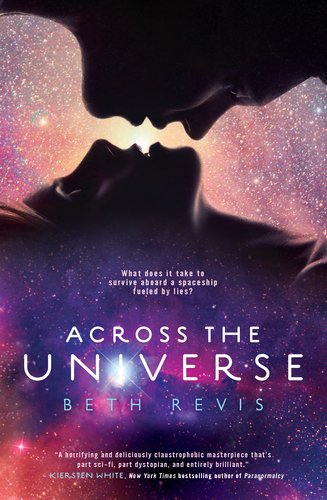
Review: Across the Universe

Oh dear, I feel terrible for not updating the blog regularly. It's been pure forgetfulness on my part. I'm once again in the bad habit of reading but not reviewing. Hopefully I'm not too rusty. :)
Book Summary:
Seventeen-year-old Amy joins her parents as frozen cargo aboard the vast spaceship Godspeed and expects to awaken on a new planet, three hundred years in the future. Never could she have known that her frozen slumber would come to an end fifty years too soon and that she would be thrust into the brave new world of a spaceship that lives by its own rules.
Amy quickly realizes that her awakening was no mere computer malfunction. Someone-one of the few thousand inhabitants of the spaceship-tried to kill her. And if Amy doesn't do something soon, her parents will be next.
Now Amy must race to unlock Godspeed's hidden secrets. But out of her list of murder suspects, there's only one who matters: Elder, the future leader of the ship and the love she could never have seen coming.
My Opinion:
So I knew this book was going to be big the moment I saw Hunger Game references abound (it's the Hunger Games of space books! analysts shouted) and it's impeccably designed cover appeared in Costco. (Only the heavy hitters sell in non-bookstores.)
And Across the Universe certainly opens to a marvelous first chapter--the haunting description of Amy and her parents being frozen into a mummy-esque state for the next 300 years is completely engrossing. I had only to read the first page before I decided to buy Across the Universe. I think this:
"Mom wanted me to go first. I think it was because she was afraid that after they were constrained and frozen, I'd walk away, return to life rather than consign myself to that cold, clear box. But Daddy insisted."
Is perhaps one of the best YA paragraphs I've ever read--something to do with the rhythm, Amy's voice slicing clear through it.
Unfortunately, the book failed to live up to it's glorious first chapter.
Here's why:
1. The characters (not enough depth). POV consequently suffers because of this.
Across the Universe is narrated by a duo: Amy, the Earth girl, the one who opens and closes the book, the one who's the reader's friend, the one we can relate to. And then, Elder: oh, he's such a darling boy. I liked him as a character a lot, but seventeen years living in a screwed up, totalitarian society certainly leaves its mark.
At first, I liked Amy. She was relatable. But as the chapters progressed, I quickly grew bored with her narration. I began to question why she was even a POV in this book, other than to form a bridge with the reader, with her unlikely tales of a futuristic Earth (Yearbook staffer, check. Cross country runner, check. Boyfriend left behind? Check) that we can relate to oddly out of place and unrealistic*. And then, there's the very problem that Elder idolizes her so much--makes her seem more like an object, less human, by the very dint of this lionizing. Soon, I got the impression that Amy was only special because she's from Earth. This is her defining characteristic--she's an Earthling amongst a ship filled with crazed and confused people. Somehow, I want more out of a main character other than an ability to chirp about Earth-related activities and recognize that things are way weird on this ship--I can do that myself, thanks. Although, her determination to continue on without her parents is a show of strength.
Elder is sweet, for all his tendencies to back down (he's only been conditioned to do this from the day he was born! I want to shout at all his naysayers). And moving past his overwhelming tendency to view Amy as something he has control over, he's got good intentions. I really wish that the entirety of the book had been narrated from Elder's POV--I think it would have led to a much stronger novel, overall. But as such, I can only say I much preferred his chapters to Amy's--his relationship with the ship's leader Eldest is particularly intriguing, his knowledge of the ship, and struggle to understand betrayal and shake himself from an upbringing built on lies is the core of the book and where the themes are rooted.
Like I said, I felt Amy's POV to be unnecessary. Also, there's the problem that the voices were too similar--I'd read a few pages of Amy's narrative without realizing that it was actually Elder's. I suppose I shouldn't complain too much, because ranging from Shiver to Smack, I've always, always had issues with multi-POV books in that the voice is just too darn similar between each first-person narrator.
Ultimately, I felt that in Across the Universe, there are two halfway-there main characters (Elder & Amy) instead of one fully-fleshed out main character.
2. The hodgepodge genre-hopping, veering plot that is both it's downfall and defining characteristic.
At first, I think the promise of a combination of genres is what drew me to this book. Sci-fi (aboard a spaceship, no less) with a sharp dystopian hook, romance to boot, and a strong murder mystery underlying it all?
Definitely sounds like a must-read.
However, I think this confusion of elements is hard to navigate at the best of times, and Across the Universe quickly falls into some problematic areas. It starts off as a murder-mystery, but as Revis begins to describe the inner workings of the ship, the dystopian elements take over, once it's clear that this is a basically a functioning society, not a space opera. I think this is some of the reason I prefer Elder's narrative--it dealt with the dystopian elements in a way that Amy's couldn't--from the viewpoint of a character brought up in such a society and only now beginning to become disillusioned.
The dystopian elements are a bit predictable: throw in a 2-dimensional dictator with unsympathetic motives (I myself began to wonder if Eldest was truly as bad as the author wanted us to believe), a Giver-esque bag of goodies for the old people and control over occupations, and a Brave New World influenced spin on sex (here, dubbed the Season.)
The dynamics of such a small society (worry about incest and the like) was fascinating, though the Season was overwrought--much to much attention and pages focused on it, to the point where the plot suffered--and ultimately smacked of "mindlessness is bad" preaching. 3. The ending. It just plain threw me for a loop.
I felt cheated. Like, explain to me please how a character could keep something so inherently important to the plot such a secret from the reader for the whole space of the book? ELDER, WHY?
Overall:
I thought the quiet despair of the book was just beautifully done. These people are trapped on a spaceship, in the middle of nowhere, and there is just no escaping the situation.
Basically, I loved that they were all hopelessly doomed, tehehe.
I thought the book was pretty well-written overall in terms of prose and there are some very lovely descriptions that have stayed with even after the last page--Amy's sunset hair, the stars, the mechanics of cyrogenics.
I think the plot was just difficult to execute and the characters could have been stronger. But I was content enough with Across the Universe--I fair sped through the book, read it all in one sitting. Though I don't know if it'll be the next Hunger Games, I think many a reader will be entertained, and I do hope it will do something for expanding the currently barren sci-fi genre (not counting dystopian books) in YA.
In short, a fairly decent book, and I will most likely be reading whatever Beth Revis writes next.
Rating: 7.5/10. Be aware that the first chapter is especially enticing. Across the Universe is definitely a library must-read, though I don't know about shelling out $18. However, its very popularity might merit a "read" label--don't want to miss out if everyone's talking about it. But like almost all bestsellers, its over-hyped.
Also, the cover over-emphasizes the romance element. Beautiful, but not an accurate representation of the book.
*If Earth is far enough in the future to have built a full-functioning spaceship and developed this much technology, I very much doubt the culture would be even remotely similar to what we're living today. I mean, that's like the difference between the 1800's and now. Hardly similar. Thus, my problem with Amy's tales of Earth that could have been describing early 21st century Earth. This was something that continually bothered me throughout the book and made me question the validity of the world-building. Oh, well--I guess it could be argued that the information given was vague enough to be interpreted any which way.