I want to write something beautiful or magical in memory of this wonderful lady. But I really just can't. I feel horribly inarticulate, like I can't express anything correctly. I feel like whatever I say is going to come out warped, not quite coming across as it should. I'm too sad--so incredibly sad.
Diana Wynne Jones is and always will be my favorite author. She's the reason I read. Her books are what made me believe in fantasy, in writing, in reading, in the world.
I want to write so many things about DWJ; paragraphs about every book I loved by her, sentences about the sense of wonder she instilled in me, lines about those countless hours I spent re-reading every word she ever published. I want to somehow capture what she means to me as an author. I'd like to express how much the news devastated me.
I wept when I heard. I haven't ever met her, but her books--oh, they're just everything to me.
Diana Wynne Jones is prolific and wonderful. She needs to be known and read. The best way to honor her is to love her works.
I hope I am honoring her. I wish I had more words in me for this post, but today, they've failed me. I know I can say with certainty that my life would not have been the same without her books--it would not have quite as much magic in it, quite as much hope.
Thank you for that, Diana Wynne Jones. I will never stop reading your books, and I will never stop loving them.
RIP.
3.26.2011
3.13.2011
Review: Anna and the French Kiss
I woke up today thinking, holy smoley, I need to write a blog post. What happened to my New Year's Resolution to post nearly daily? What a blogging fail.
I think life is moving too quickly for me (whaaa? I'm going to graduate from high school soon? I'm going to college?!), but also horrifically slowly (why do the days drag by slower than snails?).
I really should blog to fill that time up.
Anyways, a few weeks ago I was hyperventilating over Anna and the French Kiss. Reviews were uniformly glorious. I hopped to Book Depository, ordered, and it soon showed up on my door step, wrapped and bundled up. I read it last week.
Which brings me to this present day. Lately I've been feeling a bit deflated because, *drum roll* I gave up chocolate for lent.WHY DID I DO THIS TO MYSELF HOW COULD I GIVE UP MY TITULAR LOVE? NOOO000oooo!!!. So far, this has NOT been going well. *is in chocolate withdrawal*
*rolls around in pain and heartache*
*soul cries out*
Ahem.
Review time.
Book Summary:

Anna is looking forward to her senior year in Atlanta, where she has a great job, a loyal best friend, and a crush on the verge of becoming more. Which is why she is less than thrilled about being shipped off to boarding school in Paris—until she meets Étienne St. Claire: perfect, Parisian (and English and American, which makes for a swoon-worthy accent), and utterly irresistible. The only problem is that he's taken, and Anna might be, too, if anything comes of her almost-relationship back home.
Anna and the French Kiss starts out slow. In particular, the first three chapters drag by at a glacial pace, as the narrator busies herself with filling in backstory. However, the novel soon picks up speed, and by the end manages to overcome most of its flaws and standout as one of YA's funnest romance reads of the year.
I am jealous of Anna. Oh, how I wish that my parents had packed me off to boarding school in history-soaked Paris, bakery goods and beautiful architecture everywhere, the ambiance of another country to fill my days. An experience like that would have quite honestly made my life, so at first I could not relate to the homesickness and resentful moping Anna felt as she acclimated to her new environment. Of course, many teenage girls would feel the same way as her and all in all, Anna is a pretty realistic character, which is the most important thing. I appreciated that she had a real passion--film--in her life, and ambitions to become something when she was older. I appreciated that her dialogue wasn't stilted or forced, that she thought like a teenage girl, that she had insecurities and flaws that added to her characterization. Above all, I found her relatable and likable, if a bit humdrum.
I'm not so sure about the other characters though. I know that Etienne is supposed to the ultimate love interest, but I didn't really care for him. He seemed a little too, I don't know, perfect. How many teenage boys exist like him? I really think they're a rare, if not extinct, breed. But I guess a suspension of belief on my part is needed, and the fact that he seems like a relatively caring, sweet person really negates a lot of the realism problems. The thing is, though, that as the story progressed, and Anna fell more and more in love with him, to the point of blind devotion, I couldn't help but wonder how unreliable Anna is with her observations of him. We're presented with this perfect semblance of a teenage guy: nice hair, an English accent, extremely intelligent, caring. Yet, his actions are anything but. If you pause and really think about him objectively-- fuzzy descriptions aside-- he's actually quite a jerk. He strings Anna along (a later explanation of continuous misunderstandings didn't really convince me) for much of the book. He flirts with other girls. He basically is leading Anna on, while he has a serious girlfriend that he won't break up with. I have to ask, isn't that cheating? Isn't breaking up with the girl you're not in love with anymore the decent thing to do before you start gallivanting around town?
I don't know, that just strikes me as a horrid thing to do, whatever Anna tells me.
This book posed a few interesting questions for me as a reader. Am I just not a romance reader, since I often find such issues with the idealized guy? Am I just cynical? Is the devotion Anna has in anyway similar to the devotion paranormal main characters have for their immortal boyfriends that I find so troubling? How do you differentiate between love and obsession?
I think I mostly got the impression of love out of Anna and the French Kiss. What really saved the book was the gradual development of the relationship, the fact that they were friends first, that Anna helps Etienne through a hard time because she cares about him, not because he's got a pretty face. I think what separates this book from most YA romance is the fact that the relationship is mostly based on the two's actions for each other, not how hot or physically attracted they are to each other.
And that makes all the difference.
The one thing I thought was unrealistic: the college application process described. The timing was way off for when Anna got her acceptances, unless she got early notification, and it really wasn't explained at all, or explained vaguely. I found it strange that Anna kinda underhandedly decided about the whole thing without telling the reader about it. I mean, if you're going to move from Paris across to the other side of the country that you're normally from, I think that'd factor into your thoughts during senior year. At least a little bit, I'd hope.
Ultimately, as much as a I complain, I can't deny that I had a wonderful time reading the book, and was caught up in the romance and most of all, her experience in Paris. Perkins has a gift for making her main character really develop, though many of the secondary characters did not come to life and were not as well-formed as Anna. I loved that Anna grew out of her hermitly ways and really blossomed. It was quite a nice thing to read about, and the relationship portrayed was endlessly complicated and interesting.
My Rating: 8.25/10. A good book, overall. I appreciated the many barbs against Nicholas Sparks types (ie Anna's Dad), too.
ETA: I think most readers will enjoy it more than I did, so yes, I do recommend it :)
I think life is moving too quickly for me (whaaa? I'm going to graduate from high school soon? I'm going to college?!), but also horrifically slowly (why do the days drag by slower than snails?).
I really should blog to fill that time up.
Anyways, a few weeks ago I was hyperventilating over Anna and the French Kiss. Reviews were uniformly glorious. I hopped to Book Depository, ordered, and it soon showed up on my door step, wrapped and bundled up. I read it last week.
Which brings me to this present day. Lately I've been feeling a bit deflated because, *drum roll* I gave up chocolate for lent.
*rolls around in pain and heartache*
*soul cries out*
Ahem.
Review time.
Book Summary:
Anna is looking forward to her senior year in Atlanta, where she has a great job, a loyal best friend, and a crush on the verge of becoming more. Which is why she is less than thrilled about being shipped off to boarding school in Paris—until she meets Étienne St. Claire: perfect, Parisian (and English and American, which makes for a swoon-worthy accent), and utterly irresistible. The only problem is that he's taken, and Anna might be, too, if anything comes of her almost-relationship back home.
As winter melts into spring, will a year of romantic near-misses end with the French kiss Anna—and readers—have long awaited?
My Opinion:Anna and the French Kiss starts out slow. In particular, the first three chapters drag by at a glacial pace, as the narrator busies herself with filling in backstory. However, the novel soon picks up speed, and by the end manages to overcome most of its flaws and standout as one of YA's funnest romance reads of the year.
I am jealous of Anna. Oh, how I wish that my parents had packed me off to boarding school in history-soaked Paris, bakery goods and beautiful architecture everywhere, the ambiance of another country to fill my days. An experience like that would have quite honestly made my life, so at first I could not relate to the homesickness and resentful moping Anna felt as she acclimated to her new environment. Of course, many teenage girls would feel the same way as her and all in all, Anna is a pretty realistic character, which is the most important thing. I appreciated that she had a real passion--film--in her life, and ambitions to become something when she was older. I appreciated that her dialogue wasn't stilted or forced, that she thought like a teenage girl, that she had insecurities and flaws that added to her characterization. Above all, I found her relatable and likable, if a bit humdrum.
I'm not so sure about the other characters though. I know that Etienne is supposed to the ultimate love interest, but I didn't really care for him. He seemed a little too, I don't know, perfect. How many teenage boys exist like him? I really think they're a rare, if not extinct, breed. But I guess a suspension of belief on my part is needed, and the fact that he seems like a relatively caring, sweet person really negates a lot of the realism problems. The thing is, though, that as the story progressed, and Anna fell more and more in love with him, to the point of blind devotion, I couldn't help but wonder how unreliable Anna is with her observations of him. We're presented with this perfect semblance of a teenage guy: nice hair, an English accent, extremely intelligent, caring. Yet, his actions are anything but. If you pause and really think about him objectively-- fuzzy descriptions aside-- he's actually quite a jerk. He strings Anna along (a later explanation of continuous misunderstandings didn't really convince me) for much of the book. He flirts with other girls. He basically is leading Anna on, while he has a serious girlfriend that he won't break up with. I have to ask, isn't that cheating? Isn't breaking up with the girl you're not in love with anymore the decent thing to do before you start gallivanting around town?
I don't know, that just strikes me as a horrid thing to do, whatever Anna tells me.
This book posed a few interesting questions for me as a reader. Am I just not a romance reader, since I often find such issues with the idealized guy? Am I just cynical? Is the devotion Anna has in anyway similar to the devotion paranormal main characters have for their immortal boyfriends that I find so troubling? How do you differentiate between love and obsession?
I think I mostly got the impression of love out of Anna and the French Kiss. What really saved the book was the gradual development of the relationship, the fact that they were friends first, that Anna helps Etienne through a hard time because she cares about him, not because he's got a pretty face. I think what separates this book from most YA romance is the fact that the relationship is mostly based on the two's actions for each other, not how hot or physically attracted they are to each other.
And that makes all the difference.
The one thing I thought was unrealistic: the college application process described. The timing was way off for when Anna got her acceptances, unless she got early notification, and it really wasn't explained at all, or explained vaguely. I found it strange that Anna kinda underhandedly decided about the whole thing without telling the reader about it. I mean, if you're going to move from Paris across to the other side of the country that you're normally from, I think that'd factor into your thoughts during senior year. At least a little bit, I'd hope.
Ultimately, as much as a I complain, I can't deny that I had a wonderful time reading the book, and was caught up in the romance and most of all, her experience in Paris. Perkins has a gift for making her main character really develop, though many of the secondary characters did not come to life and were not as well-formed as Anna. I loved that Anna grew out of her hermitly ways and really blossomed. It was quite a nice thing to read about, and the relationship portrayed was endlessly complicated and interesting.
My Rating: 8.25/10. A good book, overall. I appreciated the many barbs against Nicholas Sparks types (ie Anna's Dad), too.
ETA: I think most readers will enjoy it more than I did, so yes, I do recommend it :)


3.04.2011
life as a book sniffer
I have a confession to make.
I sniff books.
Please, don't judge. Don't look askance. Stop raising your internet eyebrows in judgmental ridges, I say!
I can't help it. And may I ask:
HAS BOOK SNIFFING EVER HURT A SOUL?
I say no. (Unless of course, someone was allergic to a ink printed on a page and died tragically as they inhaled. )
It's an innocent enough act, once explained.
1. IN THE MIDST OF READING
I will be sprawled on the couch or perhaps lying on bed, with a good book in hand, scanning the lines, letting them wash over me in waves of language.

2. ONE OR TWO FATES WILL INEVITABLY THEN OCCUR:
a) My eyes will close, my arms crumple, and the weighty tomefalls haphazardly comes to rest on my nose, whereupon I breathe in the musty scent of an inky-splashed book sniff delicately at the spine.
b) I come to the end of the chapter, and feel the need to spring nimble as a lame deer (i.e. fall) to my bookshelf, and sniff, just to see if the area surrounding my bookshelf is yet acquiring that bookstore-eque SMELL. That of thousands of pages nesting close together with stories winding through them.
My disappointed verdict, as always: Nope, doesn't smell bookish yet.

3. SMELLING EUPHORIA
I think a particularly good book tends to smell better than others. But all books smell--beyond their material scent, of their contents. Move beyond the mundane ink and paper descriptions and transcend your nasal limitations!
Doesn't Harry Potter smell a bit like, uhhh, MAGICAL WONDER?
Doesn't Hunger Games smell a bit like FRENZIED ACTION?
Doesn't I am the Messenger smell a bit like, uhh,COMING-OF-AGE?
Doesn't The Road smell a bit desperate and dusty (oh, wait, that might just be because of the two-feet dust layer over my room...)
I say thus to you naysayers: smells absolutely should be nonsensically conflated with feelings and ideas. Yes.
*A CONCLUSION IN WHICH THIS POST BRIEFLY MAKES SENSE*
In some strange way the scent of books is comforting. (:
I do really love that new book smell of bookstores, though. Always makes me pause when I step through the threshold of Barnes & Noble. *sigh*
Do you too enjoy the scent of books?
I sniff books.
Please, don't judge. Don't look askance. Stop raising your internet eyebrows in judgmental ridges, I say!
I can't help it. And may I ask:
HAS BOOK SNIFFING EVER HURT A SOUL?
I say no. (Unless of course, someone was allergic to a ink printed on a page and died tragically as they inhaled. )
It's an innocent enough act, once explained.
THE MECHANICS OF BOOK-SNIFFING
1. IN THE MIDST OF READING
I will be sprawled on the couch or perhaps lying on bed, with a good book in hand, scanning the lines, letting them wash over me in waves of language.

2. ONE OR TWO FATES WILL INEVITABLY THEN OCCUR:
a) My eyes will close, my arms crumple, and the weighty tome
b) I come to the end of the chapter, and feel the need to spring nimble as a lame deer (i.e. fall) to my bookshelf, and sniff, just to see if the area surrounding my bookshelf is yet acquiring that bookstore-eque SMELL. That of thousands of pages nesting close together with stories winding through them.
My disappointed verdict, as always: Nope, doesn't smell bookish yet.

3. SMELLING EUPHORIA
I think a particularly good book tends to smell better than others. But all books smell--beyond their material scent, of their contents. Move beyond the mundane ink and paper descriptions and transcend your nasal limitations!
Doesn't Harry Potter smell a bit like, uhhh, MAGICAL WONDER?
Doesn't Hunger Games smell a bit like FRENZIED ACTION?
Doesn't I am the Messenger smell a bit like, uhh,COMING-OF-AGE?
Doesn't The Road smell a bit desperate and dusty (oh, wait, that might just be because of the two-feet dust layer over my room...)
I say thus to you naysayers: smells absolutely should be nonsensically conflated with feelings and ideas. Yes.
*A CONCLUSION IN WHICH THIS POST BRIEFLY MAKES SENSE*
In some strange way the scent of books is comforting. (:
I do really love that new book smell of bookstores, though. Always makes me pause when I step through the threshold of Barnes & Noble. *sigh*
Do you too enjoy the scent of books?
2.28.2011
Review: Across the Universe
Oh dear, I feel terrible for not updating the blog regularly. It's been pure forgetfulness on my part. I'm once again in the bad habit of reading but not reviewing. Hopefully I'm not too rusty. :)
Book Summary:
Seventeen-year-old Amy joins her parents as frozen cargo aboard the vast spaceship Godspeed and expects to awaken on a new planet, three hundred years in the future. Never could she have known that her frozen slumber would come to an end fifty years too soon and that she would be thrust into the brave new world of a spaceship that lives by its own rules.
Amy quickly realizes that her awakening was no mere computer malfunction. Someone-one of the few thousand inhabitants of the spaceship-tried to kill her. And if Amy doesn't do something soon, her parents will be next.
Now Amy must race to unlock Godspeed's hidden secrets. But out of her list of murder suspects, there's only one who matters: Elder, the future leader of the ship and the love she could never have seen coming.
My Opinion:
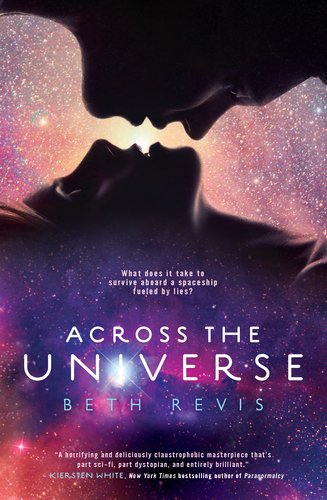
So I knew this book was going to be big the moment I saw Hunger Game references abound (it's the Hunger Games of space books! analysts shouted) and it's impeccably designed cover appeared in Costco. (Only the heavy hitters sell in non-bookstores.)
And Across the Universe certainly opens to a marvelous first chapter--the haunting description of Amy and her parents being frozen into a mummy-esque state for the next 300 years is completely engrossing. I had only to read the first page before I decided to buy Across the Universe. I think this:
"Mom wanted me to go first. I think it was because she was afraid that after they were constrained and frozen, I'd walk away, return to life rather than consign myself to that cold, clear box. But Daddy insisted."
Is perhaps one of the best YA paragraphs I've ever read--something to do with the rhythm, Amy's voice slicing clear through it.
Unfortunately, the book failed to live up to it's glorious first chapter.
Here's why:
1. The characters (not enough depth). POV consequently suffers because of this.
Across the Universe is narrated by a duo: Amy, the Earth girl, the one who opens and closes the book, the one who's the reader's friend, the one we can relate to. And then, Elder: oh, he's such a darling boy. I liked him as a character a lot, but seventeen years living in a screwed up, totalitarian society certainly leaves its mark.
At first, I liked Amy. She was relatable. But as the chapters progressed, I quickly grew bored with her narration. I began to question why she was even a POV in this book, other than to form a bridge with the reader, with her unlikely tales of a futuristic Earth (Yearbook staffer, check. Cross country runner, check. Boyfriend left behind? Check) that we can relate to oddly out of place and unrealistic*. And then, there's the very problem that Elder idolizes her so much--makes her seem more like an object, less human, by the very dint of this lionizing. Soon, I got the impression that Amy was only special because she's from Earth. This is her defining characteristic--she's an Earthling amongst a ship filled with crazed and confused people. Somehow, I want more out of a main character other than an ability to chirp about Earth-related activities and recognize that things are way weird on this ship--I can do that myself, thanks. Although, her determination to continue on without her parents is a show of strength.
Elder is sweet, for all his tendencies to back down (he's only been conditioned to do this from the day he was born! I want to shout at all his naysayers). And moving past his overwhelming tendency to view Amy as something he has control over, he's got good intentions. I really wish that the entirety of the book had been narrated from Elder's POV--I think it would have led to a much stronger novel, overall. But as such, I can only say I much preferred his chapters to Amy's--his relationship with the ship's leader Eldest is particularly intriguing, his knowledge of the ship, and struggle to understand betrayal and shake himself from an upbringing built on lies is the core of the book and where the themes are rooted.
Like I said, I felt Amy's POV to be unnecessary. Also, there's the problem that the voices were too similar--I'd read a few pages of Amy's narrative without realizing that it was actually Elder's. I suppose I shouldn't complain too much, because ranging from Shiver to Smack, I've always, always had issues with multi-POV books in that the voice is just too darn similar between each first-person narrator.
Ultimately, I felt that in Across the Universe, there are two halfway-there main characters (Elder & Amy) instead of one fully-fleshed out main character.
2. The hodgepodge genre-hopping, veering plot that is both it's downfall and defining characteristic.
At first, I think the promise of a combination of genres is what drew me to this book. Sci-fi (aboard a spaceship, no less) with a sharp dystopian hook, romance to boot, and a strong murder mystery underlying it all?
Definitely sounds like a must-read.
However, I think this confusion of elements is hard to navigate at the best of times, and Across the Universe quickly falls into some problematic areas. It starts off as a murder-mystery, but as Revis begins to describe the inner workings of the ship, the dystopian elements take over, once it's clear that this is a basically a functioning society, not a space opera. I think this is some of the reason I prefer Elder's narrative--it dealt with the dystopian elements in a way that Amy's couldn't--from the viewpoint of a character brought up in such a society and only now beginning to become disillusioned.
The dystopian elements are a bit predictable: throw in a 2-dimensional dictator with unsympathetic motives (I myself began to wonder if Eldest was truly as bad as the author wanted us to believe), a Giver-esque bag of goodies for the old people and control over occupations, and a Brave New World influenced spin on sex (here, dubbed the Season.)
The dynamics of such a small society (worry about incest and the like) was fascinating, though the Season was overwrought--much to much attention and pages focused on it, to the point where the plot suffered--and ultimately smacked of "mindlessness is bad" preaching. 3. The ending. It just plain threw me for a loop.
I felt cheated. Like, explain to me please how a character could keep something so inherently important to the plot such a secret from the reader for the whole space of the book? ELDER, WHY?
Overall:
I thought the quiet despair of the book was just beautifully done. These people are trapped on a spaceship, in the middle of nowhere, and there is just no escaping the situation.
Basically, I loved that they were all hopelessly doomed, tehehe.
I thought the book was pretty well-written overall in terms of prose and there are some very lovely descriptions that have stayed with even after the last page--Amy's sunset hair, the stars, the mechanics of cyrogenics.
I think the plot was just difficult to execute and the characters could have been stronger. But I was content enough with Across the Universe--I fair sped through the book, read it all in one sitting. Though I don't know if it'll be the next Hunger Games, I think many a reader will be entertained, and I do hope it will do something for expanding the currently barren sci-fi genre (not counting dystopian books) in YA.
In short, a fairly decent book, and I will most likely be reading whatever Beth Revis writes next.
Rating: 7.5/10. Be aware that the first chapter is especially enticing. Across the Universe is definitely a library must-read, though I don't know about shelling out $18. However, its very popularity might merit a "read" label--don't want to miss out if everyone's talking about it. But like almost all bestsellers, its over-hyped.
Also, the cover over-emphasizes the romance element. Beautiful, but not an accurate representation of the book.
*If Earth is far enough in the future to have built a full-functioning spaceship and developed this much technology, I very much doubt the culture would be even remotely similar to what we're living today. I mean, that's like the difference between the 1800's and now. Hardly similar. Thus, my problem with Amy's tales of Earth that could have been describing early 21st century Earth. This was something that continually bothered me throughout the book and made me question the validity of the world-building. Oh, well--I guess it could be argued that the information given was vague enough to be interpreted any which way.
2.11.2011
You Know You're a Book Blogger When...
- You have significantly more friends on Goodreads than you do on Facebook.
- Your preferred medium of communication is the written word.
- You unashamedly stalk your favorite authors online.
- The acronym ARC makes you salivate
- Your TBR list is several miles high
- 5-star ratings become applicable to everything in life, not just books
- You have an uncontrollable urge to buy everything you see in a bookstore
- Packages on your doorstep mean one thing only to you: books
- You're in desperate need of more bookshelves
- You spend more hours online than is healthy
- Getting comments on your posts make your day
- HTML is both your best friend and your nebulous, confusing enemy
- When people ask you for book recommendations, you can't just stop at one.
- You know about books coming out years ahead of time, and consequently have to endure a rather agonizing wait.
- New gadgets on blogger are the best thing since sliced bread
- You can't stop tinkering with your template
- You can hold an intelligent debate on the merits of a 2-column versus 3-column template for a book blog.
- You've perfected the art of reading while eating/walking/talking for years.
- You're pretty darn awesome.
2.05.2011
Dear YA
A short summation of what I've been wondering/hoping about for YA:
DEAR YA:
If your protagonist is described as an honors student (as most seem to be), they'll more likely be kissing a textbook than a sparkly supernatural creature.
Sincerley,
Choco, currently-kissing-a-textbook
DEAR YA:
Where do your main characters find the time to save the world and everything?
Sincerely,
Choco, swamped.
DEAR YA:
It'd be cool if maybe some more of your characters were over 18.
Sincerely,
Choco, who likes this New Adult thing.
DEAR YA:
I wish there were more minority main characters. And more socioeconmically diverse characters.
Sincerly,
Choco, who would like wider representation.
What are some of your Dear YAs?
*okay so I fail at updating the blog but currently I am buried, BURIED under schoolwork. Sorry :)
DEAR YA:
If your protagonist is described as an honors student (as most seem to be), they'll more likely be kissing a textbook than a sparkly supernatural creature.
Sincerley,
Choco, currently-kissing-a-textbook
DEAR YA:
Where do your main characters find the time to save the world and everything?
Sincerely,
Choco, swamped.
DEAR YA:
It'd be cool if maybe some more of your characters were over 18.
Sincerely,
Choco, who likes this New Adult thing.
DEAR YA:
I wish there were more minority main characters. And more socioeconmically diverse characters.
Sincerly,
Choco, who would like wider representation.
What are some of your Dear YAs?
*okay so I fail at updating the blog but currently I am buried, BURIED under schoolwork. Sorry :)
1.19.2011
Underappreciated books
I think we all have one-- or maybe a few-- of those books that we love and cherish but that no one else has ever heard of. Books that are absolutely wonderful, but somehow managed to slip by nearly unnoticed by the reading world after publication. They're the books that are the NYT bestsellers and Printz medalists of our hearts, while in reality, they're a bit unloved as they sit dusty and lonesome upon book store shelves.
It's a bit sad, really, because a lot of the time, the NYT bestsellers aren't even the most quality books. Sometimes, the books that have have the least hullabaloo surrounding them are the best.
I started off this post intending to only showcase one, but I'm weak and I can't do it.
Take three instead:
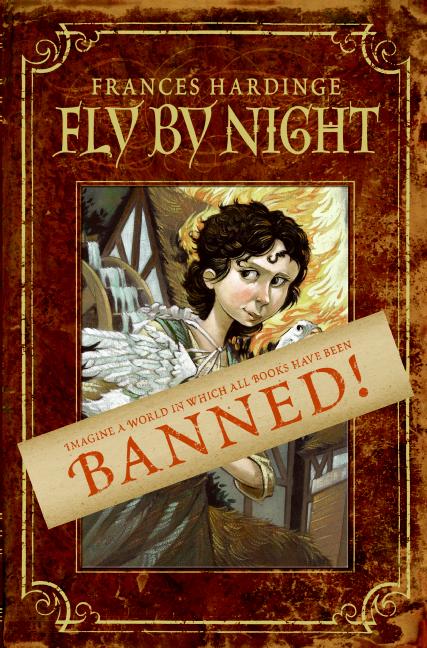
1. Fly By Night by Frances Hardinge (my review). I really think this is a modern children's classic. It's not at all as popular as it should be.
2. The Savage Damsel and the Dwarf by Gerald Morris. I love Gerald Morris, but I don't think many people know about his books. But what's not to like about King Arthur retellings full of swashbuckling humor to boot?
3. The Last of the Really Great Whangoodles by Julie Andrews Edward: I hold my love for this book in the same compartment of my heart that's reserved for the Chronicles of Narnia. It's a childhood favorite of mine.
I wanted to add on I Capture the Castle as well, but I think people have heard about it since it has a movie and all. NOT ENOUGH, THOUGH.
Also, I still hold that Diana Wynne Jones is the most underappreciated writer ever. Seriously, she's like the queen of children's fantasy, yet she doesn't get half the love she deserves for her brilliance.
Ahem. If I don't stop naming books now, I won't ever.
What's your favorite "unknown" book? Let's give our underappreciated books some love!
It's a bit sad, really, because a lot of the time, the NYT bestsellers aren't even the most quality books. Sometimes, the books that have have the least hullabaloo surrounding them are the best.
I started off this post intending to only showcase one, but I'm weak and I can't do it.
Take three instead:
1. Fly By Night by Frances Hardinge (my review). I really think this is a modern children's classic. It's not at all as popular as it should be.
2. The
Savage Damsel and the Dwarf by Gerald Morris. I love Gerald Morris, but I don't think many people know about his books. But what's not to like about King Arthur retellings full of swashbuckling humor to boot?3. The Last of the Really Great Whangoodles by Julie Andrews Edward: I hold my love for this book in the same compartment of my heart that's reserved for the Chronicles of Narnia. It's a childhood favorite of mine.
I wanted to add on I Capture the Castle as well, but I think
people have heard about it since it has a movie and all. NOT ENOUGH, THOUGH.Also, I still hold that Diana Wynne Jones is the most underappreciated writer ever. Seriously, she's like the queen of children's fantasy, yet she doesn't get half the love she deserves for her brilliance.
Ahem. If I don't stop naming books now, I won't ever.
What's your favorite "unknown" book? Let's give our underappreciated books some love!
1.17.2011
Review: Fighting Ruben Wolfe by Markus Zusak

I haven't posted much in the last week, sigh. But it's about time I did a book review.
Book Summary:
Cameron and Ruben Wolfe, are brothers from a family clinging to the ragged edge of the working class. Initially to make some money, the boys hook up with a sleazy fight promoter who sees something marketable, audience-pleasing in the untrained brothers’ vulnerability.
So they hide the boxing from their long-suffering mother. And Cameron hides what's going on in his head from the girls who come to the matches, the girls he wishes he could reach.
But the Wolfes soon find that they’re fighting for more than tips and pay-off money. It becomes for them a fight for identity, for dignity, and for each other.
The question is, in a fight like that, who makes it out of the ring intact?
My Opinion:
"She smiles pretty, and in that split second, I forget. I forget about Perry Cole and all those future punches. It makes me wonder, Do we spend most of our days trying to remember or forget things? Do we spend most of our time running toward or away from our lives? I don't know."
So wonders Cameron Wolfe, the big-hearted, tender protagonist of Fighting Ruben Wolfe. Passages like the one above--full of a quiet sort of wisdom, almost a ache to it--aren't uncommon in this book. They're plentiful, since in only 200 pages or so, Markus Zusak crafts a heartwarming, coming-of-age story full of beauty and uncanny insight. It' not surprising, given that this is the same author who wrote the magnificent The Book Thief and contemporary must-read I am The Messenger.
Yeah, that Zusak.
I haven't gone on a fangirl spiel about Zusak on this blog for a while, so some of you might not know that I'm, well, an obsessive fangirl about his works, to put it lightly. I've been trying to track down a reasonably priced Fighting Ruben Wolfe for the longest time, and last week, I finally managed to snatch up a cheap copy on Amazon.
It arrived yesterday.
I devoured it instead of breakfast.
This is the second book I've read about Cameron Wolfe, having caved and read Getting the Girl, the sequel, a while back. It doesn't really matter though, since even though this novel is part of a 3-book series, each book is standalone.
I loved it.
I love it because it's like an early sneak-peak of Zusak. If you start with the Cam books, move to I am the Messenger, and finish at The Book Thief, you can see a clear progression. The prose becomes more refined. The subject topic, more serious. The books, longer.
Still, you get the trademark Zusak: the swaggering sentence fragments, the standalone single-sentence paragraphs falling in quick succession down a page, the wonderful writing that steals your breath away, the characters that are so real that you can almost hear their hearts beating in between the pages.
I'm quite convinced that the Wolfe family are real people. Cameron, the main character, has a voice that's memorable. He's the boy who cares too much about everybody, who's scrawny and a little bit like a loser, who yearns for a girl to notice him, who's afraid, but who'll fight for anything, his heart is so big. Ruben is his brother--hungry, wolfish, trying to prove something. Then there's his tired mother, his out-of-work father, older siblings Sarah and Steve, and a house full of unpaid bills and encroaching despair.
When the brothers get their chance at money and a bit of glory by fighting in underground boxing ring, they seize the day. But really, this book isn't just about throwing punches, since all the action is secondary to the character growth. The brothers earn themselves a bit of self-respect, they mature, and their sibling relationship--it just expands, till you can feel the love the two brothers have for each other, till you can feel the love the whole Wolfe family has for each other. The Wolfe brothers' relationship really comes out in the passages at the end of every chapter--short conversations the brothers have before they fall asleep.
Then, there's the prose. When it's Zusak, you can expect to be blown away. Here's one of the many passages that made me stop reading so I could just sit and take in:
"We run together in track pants and old football jerseys and the city is awake and smoky-cold and our heartbeats jangle through the streets. We're alive. Our footsteps are folded neatly, one after the other. Rube's curly hair collides with sunlight. The light steps at us between the buildings. The train line is fresh and sweet and the grass in Belmore Park has the echoes of dew still on it. Our hands are cold. Our veins are warm. Our throats suck in the winter breath of the city, and I imagine people still in bed, dreaming. To me it, feels good. Good city. Good world, with two wolves running through it, looking of the fresh meat of their lives. Chasing it. Chasing hard even though they fear it. They run anyway."
The hair colliding with sunlight part...that just killed me. It really did.
So, what I've been meaning to say as I've bumbled around in this review, throwing words out left and right, is that I wish this book was readily available in every bookstore. It's beautifully written, and it's one of those books that YA readers need more of. It's a contemporary book with an original plot (nope, no dead characters here) with characters and conflicts that are real.
I just plain wish this book was easier to get a hold of.
If you're a dedicated Zusak fan, I'd definitely recommend that you do the best you can to get a hold of this, short of murder. If you're just a reader who is hungering for a lovely contemporary read, take a look around and see if you can't snatch up a copy somehow.
Rating: 9/10. Don't be scared off by the whole boxing premise. I have zero interest in boxing but I still loved this book.
1.12.2011
Waiting on Wednesday
 This week's pick: Where She Went by Gayle Forman
Summary (Courtesy of Goodreads):
It's been three years since the devastating accident ... three years since Mia walked out of Adam's life forever.
Now living on opposite coasts, Mia is Julliard's rising star and Adam is LA tabloid fodder, thanks to his new rock star status and celebrity girlfriend. When Adam gets stuck in New York by himself, chance brings the couple together again, for one last night. As they explore the city that has become Mia's home, Adam and Mia revisit the past and open their hearts to the future - and each other.
Told from Adam's point of view in the spare, lyrical prose that defined If I Stay, Where She Went explores the devastation of grief, the promise of new hope, and the flame of rekindled romance.
I thought If I Stay (review) was an absolutely beautiful book--bittersweet and thoughtful, and full of lovely characters and well-written prose. It was definitely one of my favorites from 2009 releases.
So of course, I'm extremely excited about Where She Went. This is one of the rare occasions I've come across where a contemporary book that fits into this YA niche of walking the line between commercial and literary has come out with a sequel. I'm particularly curious to see what Adam's voice will be like.
The only thing I don't like is the cover. Sure, it's pretty, but I much prefer the original If I Stay design--this book looks like it's trying to attract the readers of something like Gossip Girl, when really it should be aiming for the readers of Looking for Alaska or Jellicoe Road.
Release Date: April 5th 2011
Goodreads page
1.08.2011
I'm okay with YA protagonists that are over 18 years old. Actually, I'd like to have more of that, please.
What's got me thinking:*
Lately, I've been encountering a lot of discussions on whether college age protagonists in young adult books are allowed, or if you can even call it a young adult book if the main character doesn't fall into the Holy YA Age Range of 12-18 years old. Among the publishing community, the general consensus seems to be that protagonists out of high school are a tough sell. The comments of "but college students don't read, so there's no market for it" and "teens don't relate to protagonists that are are college aged" are always thrown in there somewhere during the discussion, which generally results in everyone agreeing and deciding to lower their main character's age to 18 or under.
As a teen reader, I'm going, what? STOP THAT.
On Age & Reading Habits
I'm sixteen, in case you're wondering.
That doesn't stop me from wanting to read about characters older than 18. I'd sure as heck love to go into the Young Adult section and pick up a book about a college freshman adjusting to their new life of freedom, stumbling around a huge campus, fighting with their roomate, and groaning about cafeteria food and being a poor student. I'd sure as heck love to read a book about a protagonist that sets off on an adventure after they graduate from high school, or who's just taken up training as a cop or joined the army or taken a job you can't do while still in school. I'd love it to bits if anyone wrote a book about a college junior's experience as a study abroad student.
I'd lap that stuff right up. Mostly importantly, I'd buy it if I saw it in the Young Adult section.
I'm an older teen. For the most part, in real life, I have no stomach for the heartaches of a 12-year-old, and I don't think I can completely grasp (I can empathize with, sure) the troubles a 50-year-old might be facing, since I haven't experienced it myself. But that doesn't stop me from relating to and being interested in fiction featuring 12-year-old protagonists, 16-year-old protagonists, and 50-year-old protagonists. It explains why the odd teen (me) or adult can't be wrenched away from the middle grade section, while boys my age have been reading fiction about 30-year-old fantasy heroes since they were 13.
Age doesn't matter as much as you'd think.
Maybe it does in real life, but it doesn't in fiction.
This is especially true since 99.9% of young adult books are being written by adults. There's a certain distance there, so that for the most part, I couldn't differentiate between a YA 15-year-old and a 18-year-old protagonist in terms of maturity and the conflicts they face if my life depended upon it. It's all pretty flexible in YA, when it comes to a few years. **
From what I've observed, children and teen readers tend to read up. As a 5th grader, I was curious to find out what middle school was like, and I sated some of that curiosity by reading a bunch of books where the protagonists were 13. I didn't have a problem at all relating to these older main characters. By middle school, I was reading books with high school protagonists, wondering if that's what it'd really be like once I got there.
Now that I'm a high school senior, I'm left either with older teen characters or adult characters. There's no bridge in between though. Just a huge gorge, and publishers saying, "JUMP ALREADY." I rarely find a book featuring a college freshman or a 20-year-old. In fact, I can't even think of one I've read lately off the top of my head.
But I'm still curious. I'd like to know what I'm in for. I think most people my age would like to know. What college is like, what renting your first apartment is like, what starting your career is like.
Most importantly, I think they'd read about it. Perhaps even prefer it over the tales of a high school freshman, or maybe even over the tales of characters their current age. It's a possibility. Maybe that explains why the college students I do know tend to read adult fiction. They're looking out for what's next for them.
New Adult
I feel like I can't talk about older protagonists without mentioning New Adult. I first heard of New Adult when St. Martin put on it's "New Adult" Submissions Contest in November 2009, and the resulting buzz crackled through the internet until it even reached me. For those of you who haven't heard of New Adult, I think of it as a more sharply defined categorization for books that have crossover appeal (books that can be sold and marketed as both YA and adult fiction) and it seems to have become viable in the last few years due to the fact that YA has become such a popular genre.
St Martin's described it as this:
And from reading Kristan Hoffman's article in Guide to Literary Agents, New Adult will likely feature protagonists from 18-26 years old. As she says:
"...[n]ew, cutting edge fiction with protagonists who are slightly older than YA and can appeal to an adult audience. Since twenty-somethings are devouring YA, St. Martin’s Press is seeking fiction similar to YA that can be published and marketed as adult—a sort of an “older YA” or “new adult.”
"But the transition from teen to adult doesn’t happen overnight either. There’s a period of time where adulthood feels like a new pair of shoes. The expectations of independence and self-sufficiency are still new, still being broken in. New Adults are the people who have just begun to walk in those shoes; New Adult fiction is about their blisters and aches."
New Adult is supposed to be geared towards older teens, college kids, and adults who are well, new to adulthood.
And I'm going: YES YES YES.
I'd like some of that.
Where's the barricade?
But I'm wondering, why aren't there any books out there already where protagonists are older than 18? Why does this have to be a new thing? Why can't I just stroll into the bookstore right now and pick up Minnie's College Adventures, Book One?
I'm not saying there aren't books like that out there. There are crossovers and college books, scattered around somewhere, I'm sure, but I don't think there's a sizable amount.
The problem is that they're not easily accessible in the young adult section. I think they should be. At least part of it, I think , is due to this misconception that I admit I'm having trouble wrapping my head around as I skim through all the blogs and threads and articles I've been reading about this age dilemma. But this is what I've gathered: YA writers who are worried about writing about older protagonists seem to point the fingers at publishers and agents who either call for a protagonist's age to be lowered or term a book with a older main character a "tough sell." Then publishers and bookstores just go on and point the fingers at readers, saying there isn't a market.
I think there is one. I think of the defining characteristic of young adult fiction as coming-of-age. I think a lot of people are coming-of-age during college or even when they're 25, and therefore it can still be YA, if an author decides that's what the character is going to be going through. What's more, I want those books in YA.
Fellow teens and young adult readers, would you be interested in fiction about college aged protagonists? Would you buy books featuring main characters in the so-called dead zone of 18-26 years old? Do you think there's a need for more of it, or are you content with what's already out there?
Maybe I'm just weird in craving older protagonists appearing on Young Adult shelves, but I'm hoping not.
*I'm hoping a post of this nature hasn't been written already, as I've been out of the loop for a bit.
**In real life, no. Those little freshman squirts are confused and lost and hopeless. Seniors know what they're doing, at least to some extent. Actually... on second thought, perhaps yes. I think I'm pretty much the same as I was a few years ago. I guess it's a bit of both.